
Full Text
Tax practitioners often face ethical dilemmas in their practice. Although they have professional responsibilities to uphold, tax practitioners are constantly tested by societal expectations. This study explored accredited tax practitioners' ethical sensitivity and moral reasoning when faced with ethical dilemmas. The study aimed to identify the keys to navigating
such difficulties. The study adopts a qualitative research methodology, utilizing interviews and thematic analysis to examine the experiences and perspectives of accredited tax practitioners. The study found that tax practitioners encounter ethical dilemmas when their obligations to
clients and the public conflict. The perception of government corruption can also impact their decision-making. To navigate these challenges, practitioners must weigh potential risks and benefits, consider personal values and upbringing, and adhere to ethical principles like integrity,
objectivity, confidentiality, professional behavior, and competence. By following these guidelines, practitioners can make sound decisions that comply with legal and ethical standards, allowing them to overcome ethical dilemmas.
such difficulties. The study adopts a qualitative research methodology, utilizing interviews and thematic analysis to examine the experiences and perspectives of accredited tax practitioners. The study found that tax practitioners encounter ethical dilemmas when their obligations to
clients and the public conflict. The perception of government corruption can also impact their decision-making. To navigate these challenges, practitioners must weigh potential risks and benefits, consider personal values and upbringing, and adhere to ethical principles like integrity,
objectivity, confidentiality, professional behavior, and competence. By following these guidelines, practitioners can make sound decisions that comply with legal and ethical standards, allowing them to overcome ethical dilemmas.

ASSESSING THE LEVEL OF OCCUPATIONAL STRESS AMONG OFFICE- BASED EMPLOYEES OF UNITED DRIVERS AND OPERATORS TRANSPORT COOPERATIVE IN P. RODRIGUEZ ST., LAPU-LAPU CITY
Views: 114, Downloads: 1
Alignment of the USJ-R BSA and BSMA 4th Year Students’ IT Skills with the Entry-level IT Skills Deemed Important in the Accounting Industry in Cebu City, Philippines
Views: 105, Downloads: 1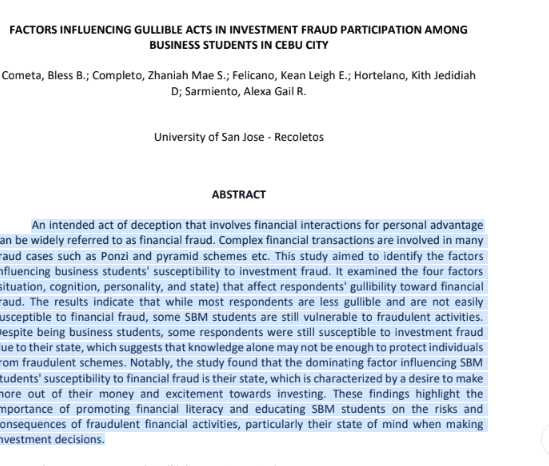
FACTORS INFLUENCING GULLIBLE ACTS IN INVESTMENT FRAUD PARTICIPATION AMONG 3 BUSINESS STUDENTS IN CEBU CITY
Views: 74, Downloads: 4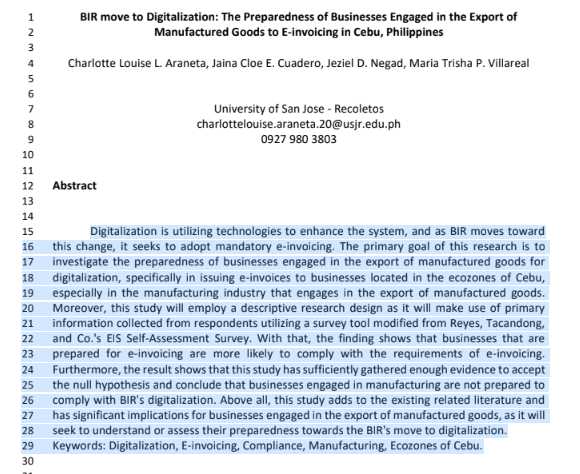
BIR move to Digitalization: The Preparedness of Businesses Engaged in the Export of Manufactured Goods to E-invoicing in Cebu, Philippines
Views: 66, Downloads: 1